Small is beautiful. It's known as the first tenet of the UNIX philosophy. Instead of building one huge, complex program, you build small parts (programs) that each do one clear job. Complex tasks get done by chaining those small programs together, and to make that possible, UNIX-based systems provide a foundation, like standard input and… Continue reading Small is beautiful
Tag: artificial-intelligence
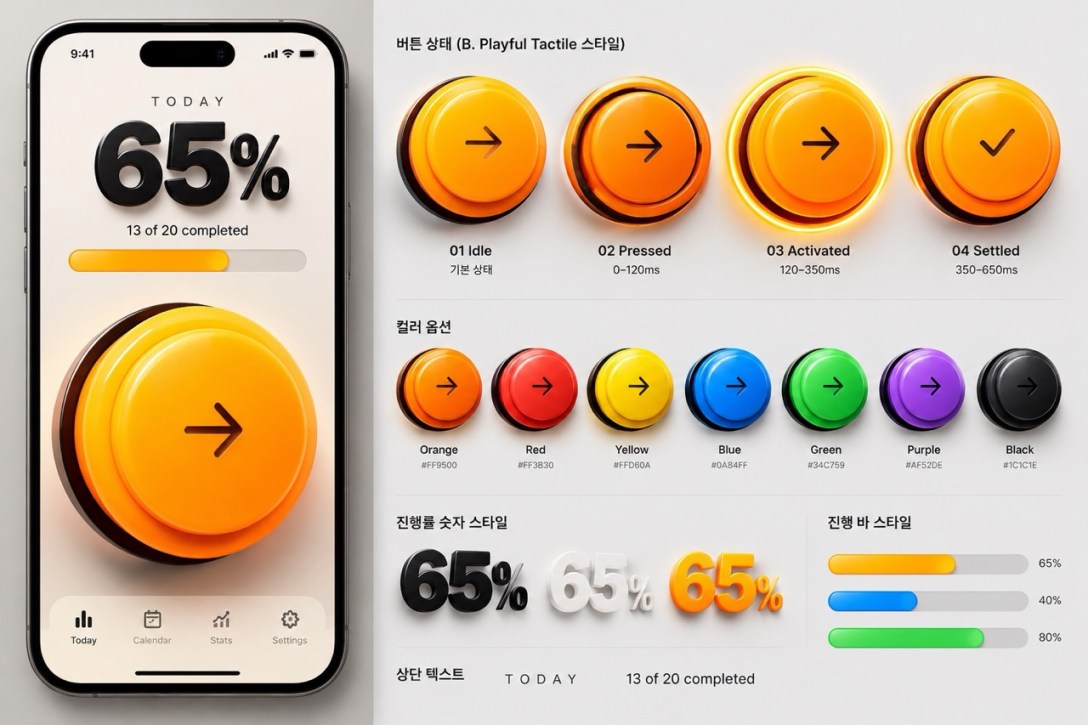
An Unexpected App Dev Diary: Day 2
Remember how, in the Day 1 diary, I said the hard part for me was writing up design requirements well enough to hand off to an AI agent? On Monday, as soon as I got to work, I took that problem to Jun, a colleague who leads the UI/UX team. I showed Jun the app… Continue reading An Unexpected App Dev Diary: Day 2
From Discord to Dooray!: Rebuilding My AI Team
Back in April, I built and ran an AI team using the channel feature that had just shipped in Claude Code. Following a format similar to the Planner, Generator, and Evaluator setup introduced at the time, I built an environment where agents could talk to each other over Discord, and I more or less managed… Continue reading From Discord to Dooray!: Rebuilding My AI Team
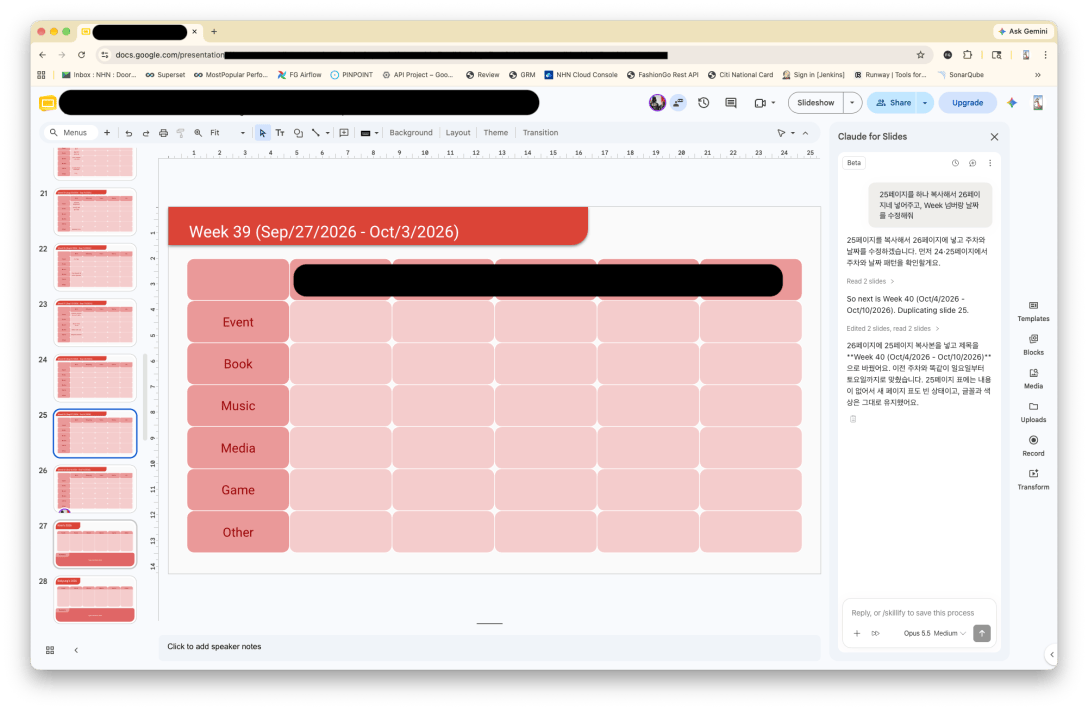
Claude Comes to Google Workspace
As soon as I heard that a Claude extension (or add-on) had come out for Google Workspace, I gave it a quick try. I was a bit disappointed when Gemini first landed in Google Workspace, so I wondered how Claude would do. It might be a small thing, but it's exactly the feature that scratches… Continue reading Claude Comes to Google Workspace
A Better OpenClaw? My First Impressions of Muse
My first impression? It felt like a well-packaged OpenClaw. I ended up tossing Google Spark (which has a similar concept) in the trash after just a few days of use, but I think I’ll actually be keeping this one around a bit longer. For now, I’ve only used it on my iPhone and via the… Continue reading A Better OpenClaw? My First Impressions of Muse
Outsourcing My Memory: How I Set Up Claude for Coding
Over the past few months, there have been massive shifts in both AI technology itself and how people are using it. But honestly, the most important thing for anyone is figuring out the approach that works best for them. I recently had a realization: in this context, "I" am not just one single entity. Depending… Continue reading Outsourcing My Memory: How I Set Up Claude for Coding
Andrej Karpathy’s llm-wiki
I've been slowly catching up with Andrej Karpathy's llm-wiki concept. Anyone currently working with AI agents probably has a question somewhere in the back of their mind: what kind of memory should you give an LLM, and how? A variety of approaches have emerged — from MEMORY.md files to RAG — but I don't think… Continue reading Andrej Karpathy’s llm-wiki
Is it Time to Say Goodbye to OpenClaw?
I think it's about time I shut down my OpenClaw server. It's been roughly two months since I first dove in during the first week of February. I believe many people, myself included, were captivated—and perhaps concerned—by two main things: first, the experience of encountering an AI that works proactively, moving beyond the chatbot format… Continue reading Is it Time to Say Goodbye to OpenClaw?
AI Agent Team vs. Single Claude Code Session
As I've mentioned briefly in a previous post, I've been building out an AI Agent Team to help me with my personal development projects. I've named them 'Team Mustang'—a nod to Fullmetal Alchemist. The current roster consists of Roy, Breda, and Hawkeye, who serve as the Planner, Generator, and Evaluator, respectively. Those of you who… Continue reading AI Agent Team vs. Single Claude Code Session
Putting AI Agent Teams to the Test: From Toy Projects to Real-World Tasks
I've been setting up AI Agent Teams for a while now, mostly with a mix of curiosity and skepticism. One of those is 'Team Mustang,' a team dedicated to supporting my personal software development project. Up until last week, I was just warming up with some light toy projects and defining the roles for each… Continue reading Putting AI Agent Teams to the Test: From Toy Projects to Real-World Tasks