I think it’s about time I shut down my OpenClaw server. It’s been roughly two months since I first dove in during the first week of February.
I believe many people, myself included, were captivated—and perhaps concerned—by two main things: first, the experience of encountering an AI that works proactively, moving beyond the chatbot format of ChatGPT or Gemini where the AI only reacts when spoken to; and second, the possibility for individuals to push past the limitations these corporate AI giants have imposed in the name of ‘security,’ albeit at some risk. I’m truly grateful for this experience, as it allowed me to learn a great deal in a very short window. However, in the two months since, several things have happened that have significantly diminished the appeal of keeping an OpenClaw server running.
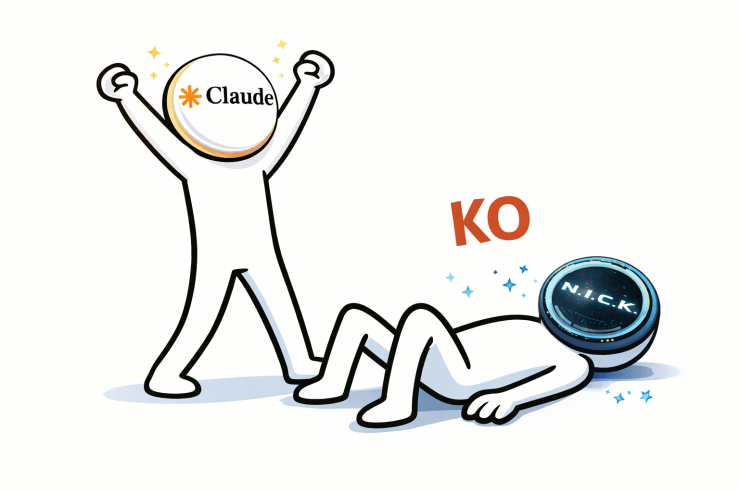
First and foremost is the rapid expansion of Claude Code’s capabilities. Over the last two months, they’ve shipped new features at a breakneck pace. Among them, the message channel and scheduled task features were particularly pivotal. Once these were implemented, Claude Code became capable of doing almost everything OpenClaw can. Of course, there are differences. While OpenClaw still holds the edge in terms of basic accessibility and convenience, Claude Code offers superior flexibility in configuration. Since I have a fair amount of technical knowledge in this area, Claude Code actually feels more satisfying unless OpenClaw provides an overwhelming level of convenience. As we all know, OpenClaw didn’t launch as a fully polished product; while the ‘shell’ of convenience is there, the actual user experience is still lacking in many areas.
Secondly, my personal user experience has been declining as OpenClaw has gone through various version updates. This isn’t necessarily a critique of the developers—it’s more of a natural symptom of a product in its early stages. In commercial terms, it’s like a product being released in alpha. I had been putting up with some inconveniences just to be part of a paradigm shift, but since Claude Code is now scratching those same itches, I feel that simply keeping an eye on the trends from a distance will be enough.
Third, Anthropic has started charging for LLM usage within OpenClaw. Previously, I used the Max plan without worrying about costs, but that’s no longer an option. To soften the blow of this transition, Anthropic provided $100 in credits, which I used to test the waters. At my current usage level, I burned through that $100 in about a week. This means that using it properly would cost around $400 a month, which I don’t believe provides equivalent value.
Finally, I’ve found it difficult to find a model that can effectively replace Sonnet or Opus for use in OpenClaw. After two months of use, I’ve realized that the most critical characteristic an LLM needs for an agentic framework like OpenClaw is ‘discipline.’ It’s problematic if the AI over-interprets my commands, and equally problematic if it under-interprets them. The most important thing is the ability to execute the command exactly as given. Of course, natural language commands are inherently imperfect. No matter how carefully I organize my instructions, there are often gaps. In this regard, Sonnet and Opus were the most impressive models I tested. Considering the cost, Sonnet seems like the better choice. Gemini is great at completing tasks, but that often leads it to become reckless. For instance, while building a flight search skill, I asked it to search for a flight to test the tool; since the skill wasn’t working properly, Gemini took it upon itself to launch a browser and attempt the search manually. GPT, on the other hand, frequently gives up on things it actually can do. For example, it would report that it lacked write permissions for a file and quit, even though the permissions were clearly there. This symptom became particularly pronounced as OpenClaw’s permission system became more stringent. Gemma was relatively snappy in this regard, but because it’s based on Ollama, I encountered frequent fallbacks, which was frustrating.
And so, I believe it’s time to either strip OpenClaw down to its bare minimum functions or prepare to take it offline. I’ll migrate my workflow to Claude Code and other tools for now, and if OpenClaw brings some good news in the future, I’ll consider coming back.
 Kirin's Technology Essay